


Description
8x10 GRID Canvas 3/4" Deep #GRD-0810
Buy a 2 or 4 pack and save on price and shipping! Click the Bulk Buy button for more details.

Grid™ Canvas is a unique product that has a grid actually printed on the canvas itself. The grids are 1"x1" with additional 1/4" lighter weight lines, very similar to graph paper. The 100% cotton canvas is 3/4" deep canvas and is stretched using our MasterWrap™ back-stapled method with tailored corners. Our proprietary stretching products uses pneumatically controlled machines that yield drum-tight tension.

Transpose a Photo, Image, Tracing, or an actual scene onto Canvas
As demonstrated by this 1498 self portrait of Albrecht Dürer, himself, the grid process is a proven method for creating realistic art from a photograph, or from an actual scene through a "gridded" glass. Grid™ makes it easier to achieve actual life-like proportions that make your portraits captivating. Still-life perspectives come alive on canvas. Artists of all levels can achieve artistic accuracy and excellence using this method.

Transpose a Scene Directly onto Canvas
This famous 1506 drawing by German artist, Albrecht Dürer, demonstrates the grid transfer process. The drawing is called the "Draughtsman's Net," because he used a glass encased in a wooden frame and black threads to create his grid pattern on the glass. The artist looks through the glass and outlines the subject and that can be transferred to the gridded canvas.
The graphic shows Dürer's entire drawing and zooms-in on the left and right sides to provide a better glimpse of how the grid process. It is a very efficient method for drawing and tracing your main lines with a high degree of accuracy and takes away most of the guesswork when generating your proportions.
You can look-up on-line more about this process and find more drawings, as Dürer himself wrote a book called, "Treatise of Measurement" after having traveled to Italy and becoming totally immersed in Italian Renaissance art theory.

Transpose a Scene Indirectly onto Canvas
Using the gridded glass described above, trace-out your scene on the other side of the same gridded glass, and then use that as your "tracing" to transpose onto the canvas. The grid on the glass corresponds to the grid printed on the canvas.
Enlarge or Reduce your Painted Image
To enlarge your image, draw smaller than a 1" x 1" grid pattern directly onto your image, glass, or plastic sheet. Then correspond the grid on the image with the heavy bordered 1" x 1" squares on the canvas.
To reduce the size of your image, draw a grid larger than 1" x 1" squares on the glass. This works even if you are transposing your image directly or indirectly, as discussed above.
You can literally trace-out exactly what you see on the "gridded" glass. That grid will correspond to the grid on the canvas and you can thereby transpose a scene with unbelievable proportional accuracy.

Build Your Own Draughtman's Net
You could easily construct your own Draughtman's Net, as depicted above, any size you want. Simply buy a piece of glass from your local hardware store, which is quite economical. We make K2™ Stretcher Bars, which are ideal for this task because they have an 1/4" interior groove that will contain the glass, and they are 2.5" deep, so the device will stand on it's edge.
For example, if you buy a glass that is say 24x36 in size, then you could buy two 26 Inch and two 38 Inch K2™ Stretcher Bars that would make a 26x38 frame. Because the frame has an interior groove, the glass will be completely contained by the Stretcher Frame, and you would have effectively constructed a similar device as Albrecht Dürer. And with a dry or wet erase marker you can draw a grid pattern on the glass. You can use your Draughtman's Net as the view-finder, described above, to trace your subject on the glass, and then transfer that image to your corresponding a Grid™ canvas.
True 5:4 Photography Proportion - 8x10 Size
And 8x10, of course, is one of the most popular sizes ever in both photography and art!
The 5:4 aspect ratio is common to both art and portrait photography, as it creates a visually pleasing format for the human figure and face. The balanced compositional format can help to create a sense of symmetry and harmony in your artwork. The 5:4 ratio has a familiar "feel", as it was commonly used in early computer monitors. Additionally, you might consider trying some relatively unknown sizes in this same proportion that we call Lost Sizes As an artist, you get the best of both worlds, because you still get to use the same aesthetically appealing 5:4 format and use rare or novel sizes that help make your art stand-out.
Explore other sizes in this same 5:4 aspect ratio:
Explore Related Products to this 8x10 Size:
- Other Styles: Classic Cotton™ • Vincent Pro™

Masterpiece Grid™ 3/4" Deep Bar • 1/8" Canvas Clearance
Canvas Clearance is the space between the Bar and the canvas. Generally speaking, more clearance reduces the risk of the canvas touching the wood and creating unsightly lines during painting. Our design provides maximum possible 1/8" clearance for a 3/4"deep profile Stretcher Bar so as not to impact your painting, but still leaving enough wood to the maximize strength of the frame.
- Stretcher Bar Profile produces a 3/4" deep stretched canvas
- 1-1/2" wide Stretcher Bar
- Solid Ponderosa Pine or Fir from the Pacific Northwest

Finger Jointed Wood is not meant for Stretcher Bars
Solid wood makes the most dependable Stretcher Bar, because one homogeneous wood member is going to behave similarly across the entire length of the Bar. Whereas, with finger-jointed wood is made-up of multiple pieces of wood, sometimes on the actual joint itself, presenting multiple points of failure which no one can control.
We only use Solid Wood to build our Stretcher Bars because a solid piece of wood will last indefinitely. When we speak of archival value, it's not just the paint you use and the quality of your canvas and ground, even the wood choices manufacturers add or reduce value to your final painting. The fact is, you don't want problems, and finger joints only increase that risk of the wood falling apart in the future.
The glue used to bind finger joints is a water based adhesive and when that wood is exposed to high humidity environments, particularly with exterior walls, the glue joints can give-up. As a manufacturer, Masterpiece® does its part to conserve as much wood as possible, and still provide a quality product that will out-perform any other in the marketplace.

Sustainability is about Reducing Deforestation
Choosing products made with sustainably sourced lumber is an important way for consumers to make a positive impact on the environment. By supporting sustainable forestry practices, we can help to reduce deforestation, promote biodiversity, and mitigate climate change. It's a simple and effective way to make a difference.

America's Custom Shop!
We offer two Masterpiece Classic depths (3/4" & 1-3/8"), as well as three canvas surfaces to choose from. There are dozens of standard sizes available for these products. If you don't find the size you want, our Masterpiece Vincent™ Pro canvases have 200+ sizes to choose from in over a dozen surfaces. And if you can't find what you want, just ask your local retailer or contact us, and we will help you with your next composition.
Our quest at Masterpiece® is clear: deliver unmatched excellence. This dedication has positioned us as the nation's beacon of quality in the world of professional fine-art canvases. Delve into our curated selection of surfaces and roll sizes, each promising perfection for your artistic endeavors.
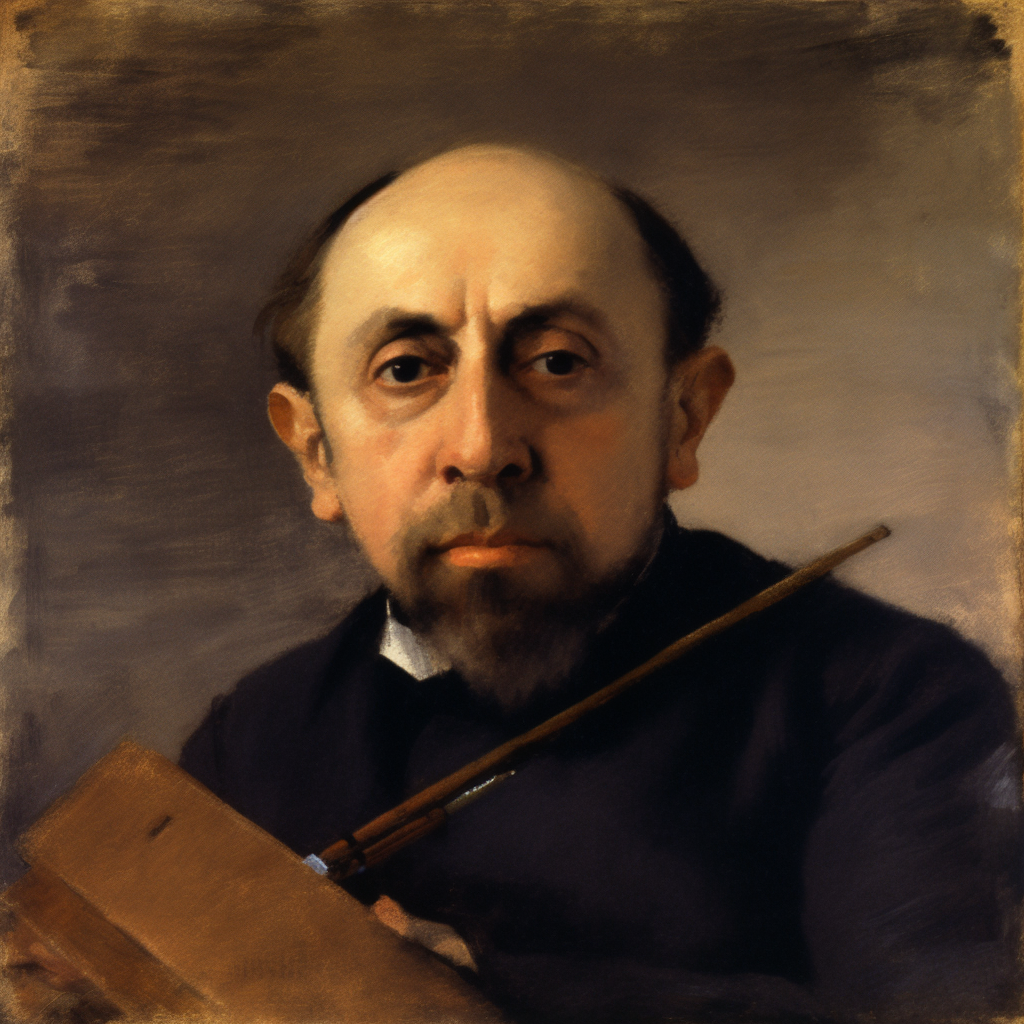
I want to be famous, but unknown.
♦ Edgar Degas
Edgar Degas, a renowned French artist of the 19th century, made significant contributions to the world of art, especially in the realm of Impressionism. His unique approach to his work often showcased his penchant for capturing fleeting moments, particularly in the bustling Parisian life, revealing a side of humanity often overlooked. The tension between public recognition and personal anonymity, as expressed in this quote, touches on a sentiment that many artists can deeply relate to.
The desire for one's work to be recognized and appreciated, to leave an indelible mark on the art world, is a dream shared by many. Yet, in that same breath, there is the yearning for personal privacy, a space where one can continue to create, innovate, and experiment without the prying eyes of the world. For artists, we often walk this tightrope, seeking to maintain the sanctity of our personal lives while hoping our art achieves the recognition it deserves. It's this balance that challenges and pushes us to evaluate what success truly means in our path.
Degas's legacy is one characterized by his groundbreaking techniques and his ability to portray ordinary scenes with extraordinary depth. His yearning to remain an enigma, despite his unmistakable talent, serves as a reminder to us. As artists, our primary duty is to our craft and the stories we wish to tell. Fame and recognition, while validating, should never overshadow the essence of why we create in the first place.
Creativity, the silent force beckoning you, finds its voice here. Harmonize your artistic process with these indelible words and meaning by Edgar Degas, and with our unique portrayal of a self portrait to inspire an enhanced melody in your art. Go make your music on canvas!
Additional Details
- SKU:
- GRD-0810
- Canvas and Depth:
- 0.75 in. Grid Canvas
- Width:
- 8 Inch
- Length:
- 10 Inch
- Aspect Ratio:
- 5:4 Photography


