


Description
84 Inch 3D Pro K3 Single Stretcher Bar 3-1/2" Deep K3-84
Keep scrolling down to learn all the details about this product and your art . . .
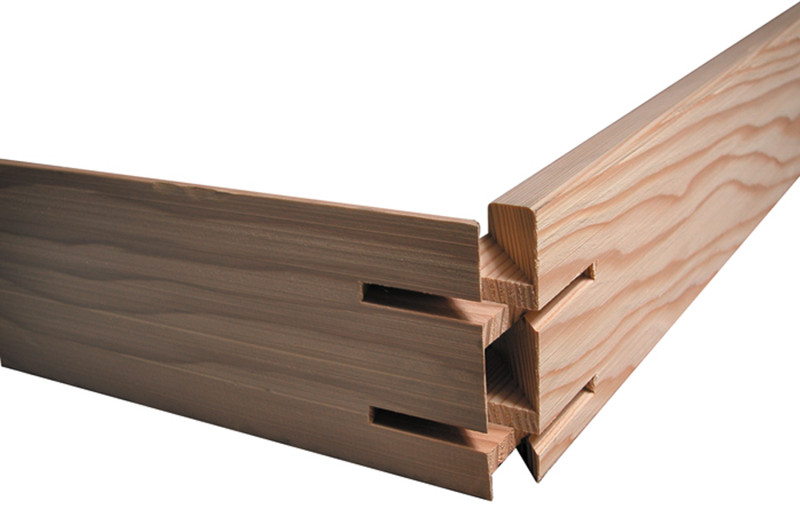
3D™ Pro K3 Stretcher Bar is the ultimate 3-1/2" museum quality Stretcher Bar system. This item is for one Stretcher Bar. Cross Braces may be ordered to create a frame that has multiple cross braces up to 16 crosses for the largest size. Frame support is the most important part of your canvas frame, because it makes it possible to achieve the maximum canvas tension. To add tension to your stretched canvas, simply press the brace keys further into their respective slots.
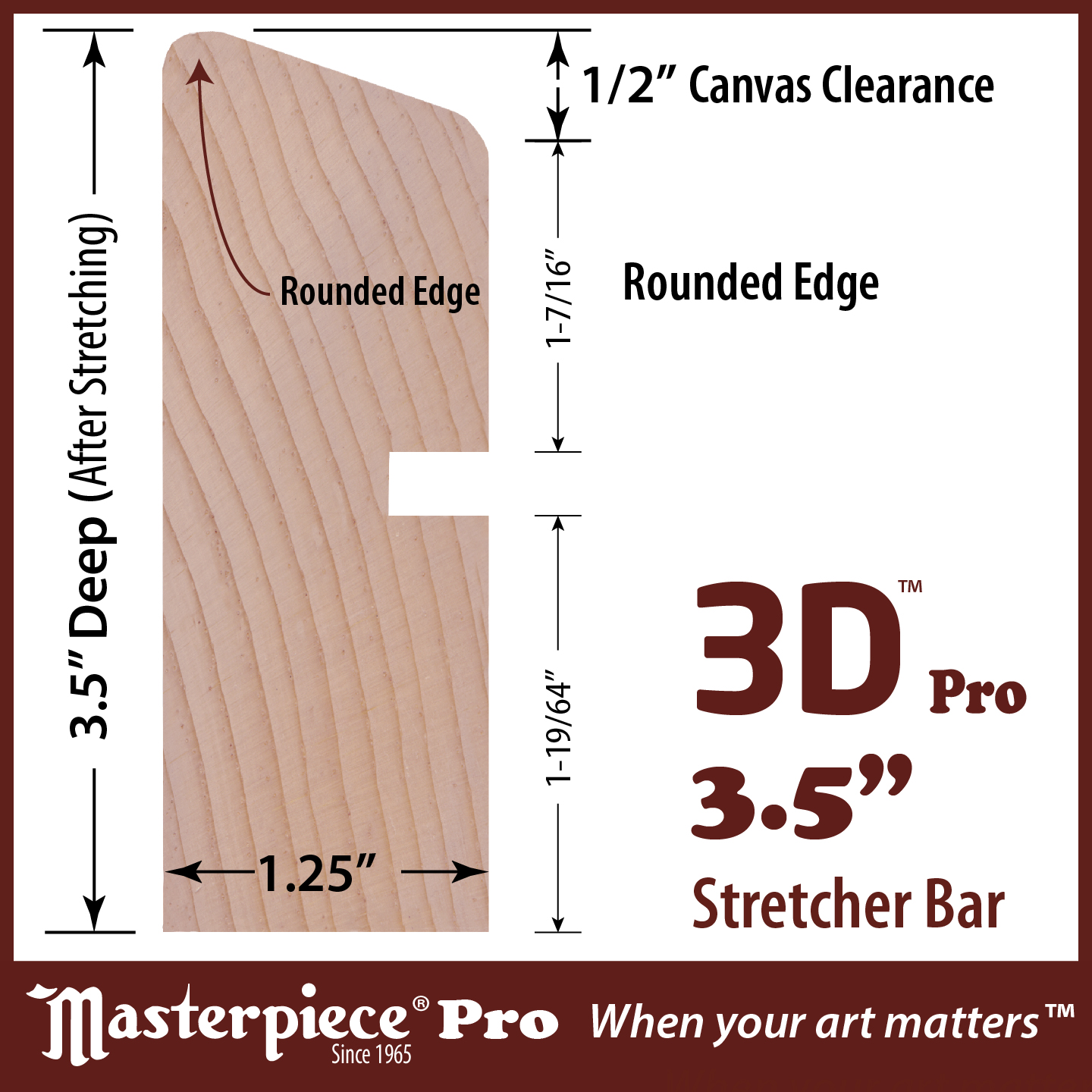
3D™ Pro 3.5 Stretcher Bar • 1/2" Canvas Clearance
1/2" Canvas Clearance is the space between the Bar and the canvas. Generally speaking, more clearance reduces the risk of the canvas touching the wood and creating unsightly lines during painting. Our design provides the optimal clearance so as not to impact your painting, but still leaving enough wood to the maximize strength of the Stretcher Bar.
- Produces a 3.5" deep stretched canvas (Actual depth is slightly thinner)
- 1.25" wide Stretcher Bar
- All Bars have an exclusive groove on the inside perimeter of the frame to which cross braces and Diamond Corner Braces attach
- Solid Ponderosa Pine or Fir from the Pacific Northwest
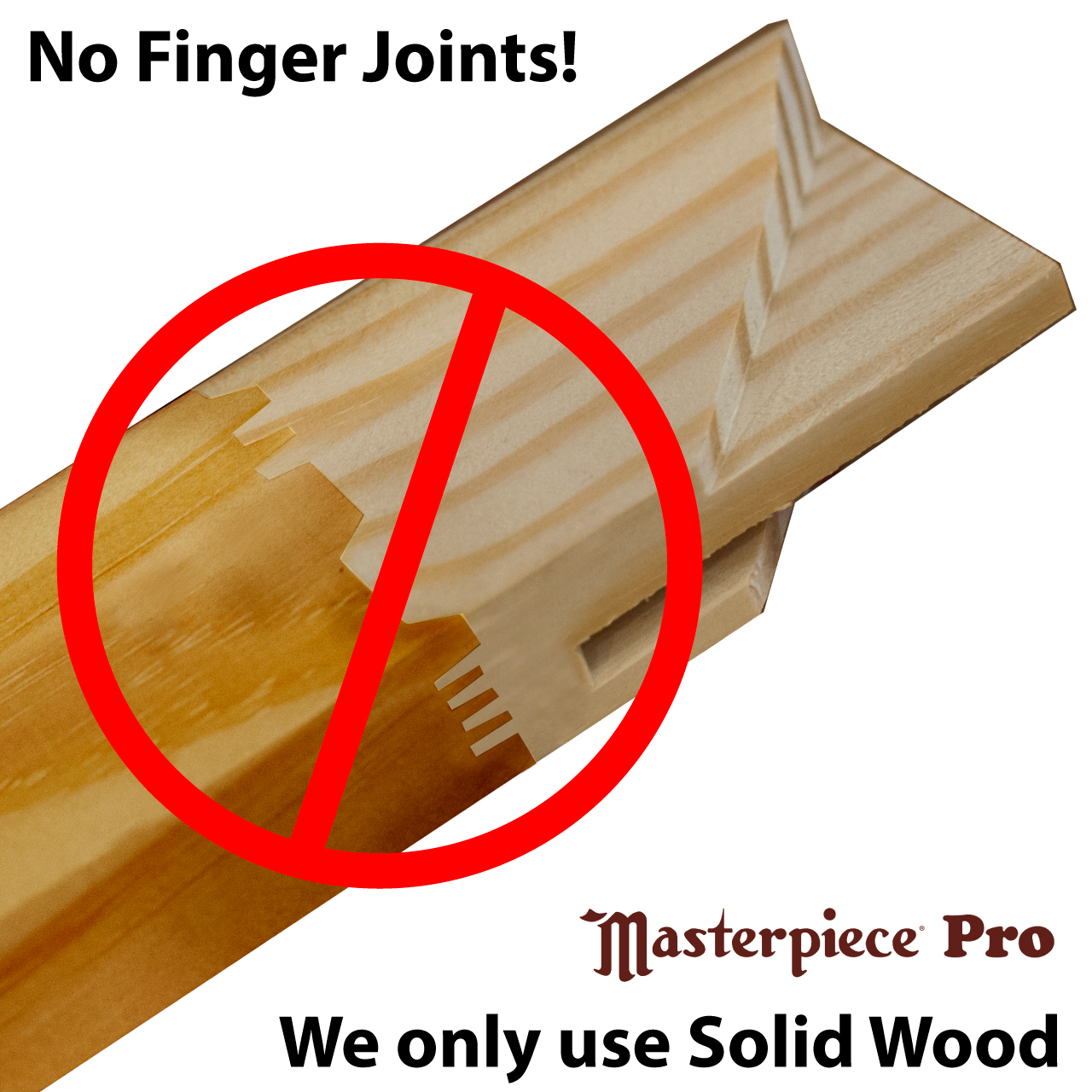
Solid Wood is Archival - Finger Jointed Wood is Not
We only use Solid Wood to build our Stretcher Bars because a solid piece of wood will last indefinitely. When we speak of archival value, it's not just the paint you use and the quality of your canvas and ground, even the wood choices manufacturers make are part of the archival process.
The principal reason manufactures use finger jointed wood is reduce cost, not increase archival value. Wood constantly grows and shrinks when the environment becomes hotter, or colder, or more humid, or more dry. Because finger jointed wood is made-up of multiple and varied pieces of wood, with varying grain patterns and densities, they each absorb and shed moisture at varying rates, which works on the glue joints that hold them together, causing the wood to bow and the joints to eventually fail, and certainly not consistent with increasing the archival value of your artwork frame support.
As a manufacturer, we do our part to conserve as much wood as possible, and still provide a quality made product that will out-perform any other in the marketplace.
Sustainability in our Forests and our Communities
At Masterpiece®, we believe in responsible and sustainable business practices. That's why we only use lumber from sustainably managed forests in our products. By doing so, we can help to protect our planet's forests, reduce our environmental impact, and support the communities that depend on these valuable resources.

Canvas Size Needed for this Stretcher Bar
Most artists will stretch the canvas and attach the staples or tacks onto the back side of the frame. Doing so allows you to paint on the edge and hang your art without needed a picture frame. Generally speaking, you should allow 10 Inches of canvas beyond the size of your frame.
For example, if you were to stretch a 46x84 frame size, which happens to be a custom proportion, your canvas should be about 56 x 94. This allows you ample room to stretch and attach the canvas on the back. Should you ever need to remove the canvas from the frame and re-attach it, it still serves that purpose too. Should you want to attach the canvas from the edge of the stretcher frame, then you can reduce the size of your canvas about 3/4" all the way around the frame.

Rooted in California and flourishing since 1965, Masterpiece® takes pride in its family-led legacy of crafting North America's premier Stretcher Bars. Our quest for excellence isn't just a goal but a commitment, positioning us as the trailblazers in the domain of fine-art canvas. Our innovative patents have set new benchmarks, ensuring our offerings stand unmatched. Dive into the tactile experience of our products, and you'll instantly recognize the distinct Masterpiece® quality, a signature appreciated by both your clientele and future art connoisseurs.

Painting, as far as technique is concerned, is a matter of instinct. I believe in following this up, and not much in teaching.
♦ George Inness
George Inness, whose evocative landscapes have captivated generations, emphasized the primacy of instinct over structured learning when it came to painting. The canvas, in his eyes, was a playground where intuition ruled supreme, allowing the brush to dance freely, echoing the artist's inner voice.
Such an approach can be liberating for artists. Instead of being constrained by rigid rules or doctrines, we are encouraged to trust our gut, our internal compass. This isn't to say that formal training is devoid of value. It provides a foundation, a starting point. But the magic, as Inness would attest, happens when we let go, when we allow our instincts to guide our hands. For in those spontaneous strokes and unplanned hues, our authentic selves emerge, revealing the essence of our spirit and the depth of our emotions. As artists, we thrive when we balance the knowledge we acquire with the instincts we nurture, recognizing that both have their role in the masterpiece that is our career.
Creativity is a dance between inspiration and innovation. Our own self portrait creation of George Inness twirls alongside these profound words, hoping to set the stage for your next artistic performance. Now go do your dance on the canvas!
Additional Details
- SKU:
- K3-84
- Canvas and Depth:
- 3.50 in. K3 Bar 3D Pro Bar
- Length:
- 84 Inch


